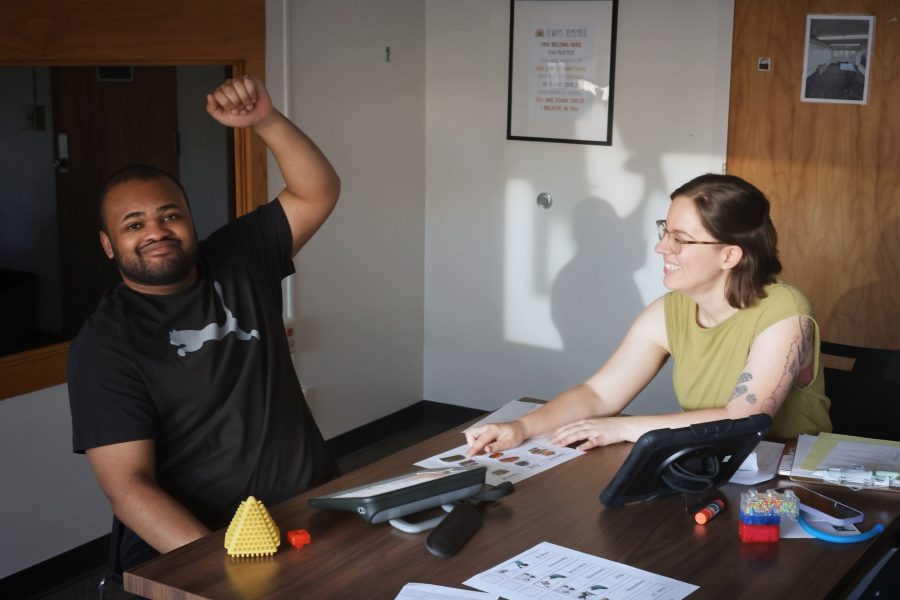
The UW Speech and Hearing Clinic provides evaluation and treatment for children and adults who have little or no functional speech. We aim to help individuals find effective ways to communicate so they can participate more fully in daily life.
Augmentative and Alternative Communication (AAC) refers to tools and strategies that help individuals communicate when spoken communication is difficult or not possible.
What Is AAC?
AAC may include:
- Low-tech tools, such as communication boards or picture systems
- High-tech devices, such as tablets or speech-generating devices
- A combination of both, based on individual needs
AAC can be used on a temporary or long-term basis and is always tailored to each person’s communication goals.
Who May Benefit
AAC may be helpful for individuals with:
- Cerebral palsy
- Autism
- Apraxia of speech
- Aphasia
- Traumatic brain injury
- Progressive neurological disorders
- Cognitive or developmental delays
What to Expect
AAC services may include:
- A comprehensive communication evaluation
- Recommendations for communication tools or devices
- Support in learning how to use AAC systems effectively
- Training for family members and communication partners
Our goal is to help each individual develop a communication system that supports independence, connection, and participation in everyday life.
AAC Adult CHAT Group
The AAC Adult CHAT Group provides opportunities for adults who use AAC to practice communication and build social connections in a supportive environment.
This group focuses on:
- Functional communication in everyday situations
- Social interaction and relationship building
- Practice using AAC in both clinic and community settings